Manor residents notice two things when their air goes out: the technician is on time, and the problem gets fixed without guesswork. That reliability does not happen by accident. ATX Heating & Air Conditioning built a training approach that turns capable hires into disciplined diagnosticians and dependable communicators. The result is faster AC repair in Manor TX, smoother ac installation in Manor TX when systems need replacement, and fewer repeat calls for AC maintenance in Manor TX.
Why this matters Summer in Central Texas can push units to the limit. A poorly trained tech can misdiagnose a refrigerant leak, overcharge a system, or replace parts that were not the root cause. That costs customers time and money, and it increases the risk of a breakdown during the next heat wave. ATX’s training model reduces those risks by combining classroom fundamentals, hands-on repetition, and field mentorship tied to measurable outcomes.
Hiring with a baseline, then raising the bar ATX does not hire only experienced techs. They hire people with the right mix of attitude, mechanical aptitude, and customer sense. That widens the pool and lets the company infuse its culture from day one. New hires typically fall into three groups: apprentices straight from trade school, experienced residential techs from other companies, and service-minded candidates from related trades such as appliance repair or refrigeration.
All hires go through a standardized screening that tests electrical fundamentals, pressure-temperature relationships for refrigerants, and customer communication scenarios. The goal of screening is not to reject candidates who lack a certificate, but to identify where training time should focus. For example, a candidate might ace safety and electricity but show shaky understanding of metering and reading superheat and subcooling. That becomes a targeted module in their training plan.
Core training pillars ATX organizes its curriculum around a small set of repeated themes that reflect the reality of emergency calls, preventive maintenance, and installations. New techs move through these pillars intentionally, gaining depth rather than surface familiarity.
- safety and code compliance, including lockout-tagout, fume response, and local permit procedures diagnostic fundamentals, with emphasis on electrical troubleshooting, airflow measurement, and refrigerant diagnostics system-level repair skills, covering common compressor, capacitor, contactor, and coil issues across brands installation standards, ensuring consistent ductwork practices, line set handling, evacuation, and proper charging customer communication and documentation, teaching clear estimates, photo documentation, and service report writing
Each pillar blends theory with hands-on repetition. For example, the diagnostic block starts with classroom sessions on circuits and on a whiteboard walk-through of failure modes. That is followed by repeated bench work, where a trainee traces open circuits with a multimeter, simulates bad capacitors, and practices replacing parts until they can do it smoothly and explain why they chose that part.
Hands-on bench work and failure simulation Numbers matter in skills training. ATX expects a trainee to complete at least 30 supervised bench repairs and 20 simulated diagnostic scenarios before moving into solo field work. Those numbers are a practical compromise: too few repetitions produce fragility; too many burn time and delay field productivity. The simulations include realistic constraints such as limited access to headers, tight crawlspaces, and broken fasteners. They also include time pressure to train judgment about when to call for backup rather than improvise.
Mentorship in the field Bench skills translate to the field only with good feedback. ATX pairs each newcomer with a senior tech for at least the first 40 service calls. The mentorship is active and structured: the senior tech watches the trainee’s intake conversation, verifies the initial diagnosis, and shadows the repair without taking over unless safety or customer satisfaction is at stake. This supervision continues until the mentor signs off on a checklist that includes diagnostics accuracy, parts selection, torque and sealing practices, wire termination quality, and clarity of the final customer explanation.
Anecdote: a first-week diagnosis A trainee once misread a pressure gauge and recommended charging a system. The mentor stepped in, demonstrated how an incorrectly zeroed gauge and a warm condenser coil can give a misleading static pressure, and showed the trainee how to calculate expected pressures using dry-bulb and wet-bulb temps. The trainee corrected the diagnosis on the spot, learned to measure subcooling correctly, and avoided an unnecessary refrigerant top-up that would have masked a failing metering device.
Certification, continuing education, and metrics ATX requires EPA Section 608 certification for all techs and encourages manufacturer-specific certifications. Beyond those boxes, the company tracks several key performance indicators per technician: first-time fix rate, callback rate within 30 days, average diagnostic time, and customer satisfaction score. Trainees must reach a minimum first-time fix rate and keep callbacks under a target percentage before they are considered fully independent. These metrics are reviewed weekly during the first three months and quarterly thereafter.
Continuing education happens through monthly technical sessions where techs bring real calls to the table. One session might dissect a stubborn multi-compressor rooftop unit failure, the next might be a refresher on variable-speed drive diagnostics. ATX emphasizes learning from mistakes; the company runs a "what went wrong" review that focuses on root cause rather than blame. That cultural element increases transparency and accelerates technical growth.
Tools, technology, and measurement discipline The simplest diagnostic is only as good as the instruments and the person using them. ATX issues calibrated meters, digital manifold sets, temperature probes, and whole-house airflow capture devices. Techs learn not to guess airflow by feel but to measure it with an anemometer or pressure drop across a coil. The training discourages "eyeballing" and rewards documented data: a typical repair report includes pre- and post-repair superheat and subcooling values, static pressures, and before/after photos.
The company also standardizes parts and procedures. That reduces variability in repairs and ensures consistent warranties. For instance, capacitor values and start assist components come from a vetted list. If a technician believes a nonstandard part is necessary, the mentor or dispatcher must approve it and document the rationale. That policy protects customers from needless upsells and reduces future failures caused by incompatible components.
Communication skills as a technical competency Repair work is social as much as technical. A well-explained repair builds trust, helps the customer make informed decisions, and reduces awkward disagreements. ATX trains techs to lead with clarity: open with what they found, show evidence, offer one or two options with costs and trade-offs, and confirm the customer's preference before proceeding. Trainees practice that script on role-play calls, emergency AC repair near me handling everything from elderly customers with mobility issues to property managers juggling multiple units.
An example of a communication trade-off: a homeowner hears a compressor humming but the unit cycles because the low-pressure switch opens. The quick fix is to bypass the switch temporarily. ATX trains techs to resist that shortcut. Instead they explain the temporary bypass risks, present the correct repair path, and offer a temporary cooling solution if the customer needs immediate comfort. That honesty costs a short wait sometimes, but it avoids repeat failures and builds reputation.
Safety culture and regulatory compliance Working on HVAC systems involves risks: refrigerant handling, electrical hazards, and fall exposures on rooftops. ATX enforces a safety-first mindset. New hires complete a safety orientation that includes lockout-tagout, ladder safety, confined space awareness for attics, and refrigerant handling protocols. The company conducts quarterly safety refresher drills and keeps incident logs. If an event occurs, supervisors run a quick debrief to extract lessons and adjust procedures accordingly.
Regulatory compliance extends to permits and disposal. Techs train on the local permitting process in Manor TX for ac installation in Manor TX projects that require city inspection. They also follow EPA guidelines for refrigerant recovery and recycling, and they maintain proper documentation for EPA audits. These practices both protect the customer and prevent legal headaches for the company.
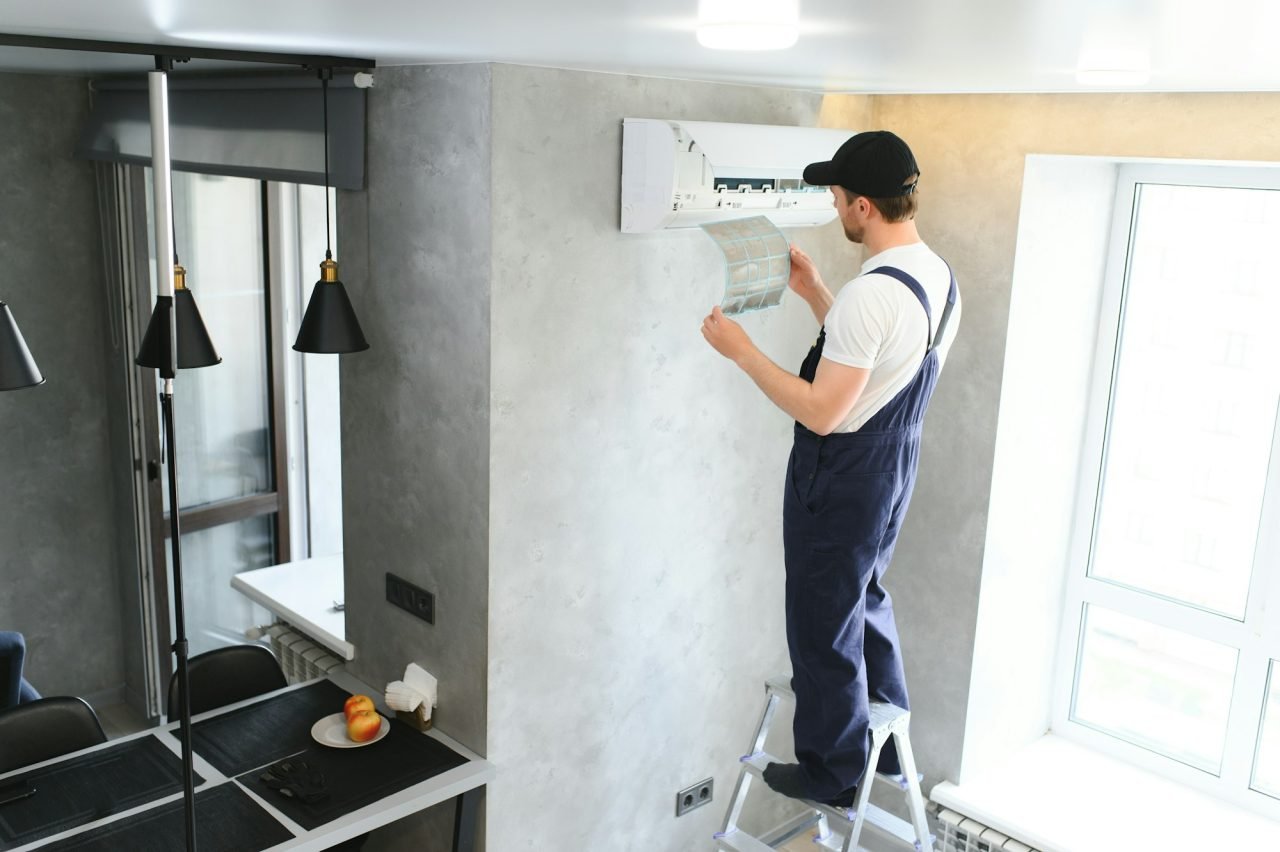
Onboarding timeline and progression A typical new hire timeline at ATX looks like this: week one is orientation, basic safety, and classroom fundamentals. Weeks two and three focus on bench work and simulated diagnostics. Weeks four to eight combine field shadowing with measured solo tasks. By month three, the technician is expected to meet baseline KPIs for first-time fix and callbacks. The company recognizes that learning curves vary; some technicians reach independence faster, some slower. Progression depends on objective measures rather than arbitrary time.
That objective approach allows ATX to invest in people who will do high-quality AC repair in Manor TX for years. It also keeps warranty and callback rates low, which is a major driver of profitability in residential service work.
Handling edge cases and trade-offs Not every call fits neatly into a training module. ATX prepares techs to make judgment calls. For example, when an older home has ductwork with asbestos-laden insulation, the tech must stop work, secure the site, and call in a remediation specialist. The trade-off is customer cost and schedule impact versus long-term health risk. ATX trains technicians to prioritize safety and to explain the rationale clearly to customers, offering a phased Helpful hints approach that limits immediate disruption.
Another frequent edge case is partial systems in which owners have mixed components from different eras. A classic example is an older furnace with a new split AC evaporator coil that does not match the outdoor unit's airflow profile. The pragmatic choice might be to recommend a staged replacement over an immediate full system swap, balancing the customer's budget with system longevity. Techs learn to present the short-term and long-term costs and to document performance expectations if the customer chooses a temporary fix.
Warranty follow-through and homeowner education Good training is not finished when the job is done. ATX trains techs to leave customers with simple, actionable education: how to change filters, what to expect from a seasonal tune-up, and when to call before a small issue becomes an emergency. That reduces preventable calls and increases customer satisfaction.
Warranty follow-through gets similar attention. If a covered part fails, the technician files a warranty claim with photos and diagnostic logs within 48 hours. That documentation reduces friction with suppliers and speeds replacements. Trainees learn the importance of clean documentation because many warranty denials result from incomplete records, not from bad parts.
Measuring success ATX measures training success through both operational metrics and customer feedback. Operational metrics include first-time fix rate, average job time, and parts return rate. Customer feedback comes from post-service surveys and online reviews. The company tracks these numbers by technician cohort and uses them to refine the training program. If a trend shows higher callbacks for a specific model or a recurring diagnostic error, ATX adjusts curriculum and sometimes negotiates additional factory training with manufacturers.
Why Manor TX homeowners benefit The training investment pays off for homeowners in Manor TX in concrete ways: shorter repair windows, fewer repeat visits, consistent upfront pricing for ac installation in Manor TX, and longer service life from properly executed maintenance. When your split system fails or your ducts need attention, you want a technician who reads numbers instead of guessing, who respects your home, and who documents the work clearly. ATX’s system produces that technician reliably.
Final note on expectations No training eliminates surprises on the job. Complex systems, undocumented previous repairs, and electrical quirks will still show up. What training does is reduce the odds of misdiagnosis and make recovery faster when surprises occur. That translates directly into lower lifetime cost of ownership for your HVAC system and better peace of mind during the hottest months.
If you need reliable AC repair in Manor TX, or predictive AC maintenance in Manor TX to avoid emergency calls, ATX Heating & Air Conditioning’s approach means you are getting technicians who were trained to measure, document, and communicate. That is how a local company turns technical skill into dependable service.
ATX Heating & Air Conditioning
13809 Theodore Roosevelt St., Manor, TX - 78653
(737) 406-8083
[email protected]
Website: https://atxheatingandac.com/